The Black Stone (Hajar al-Aswad) in Mecca: History, Meaning and a Practical Visit Guide
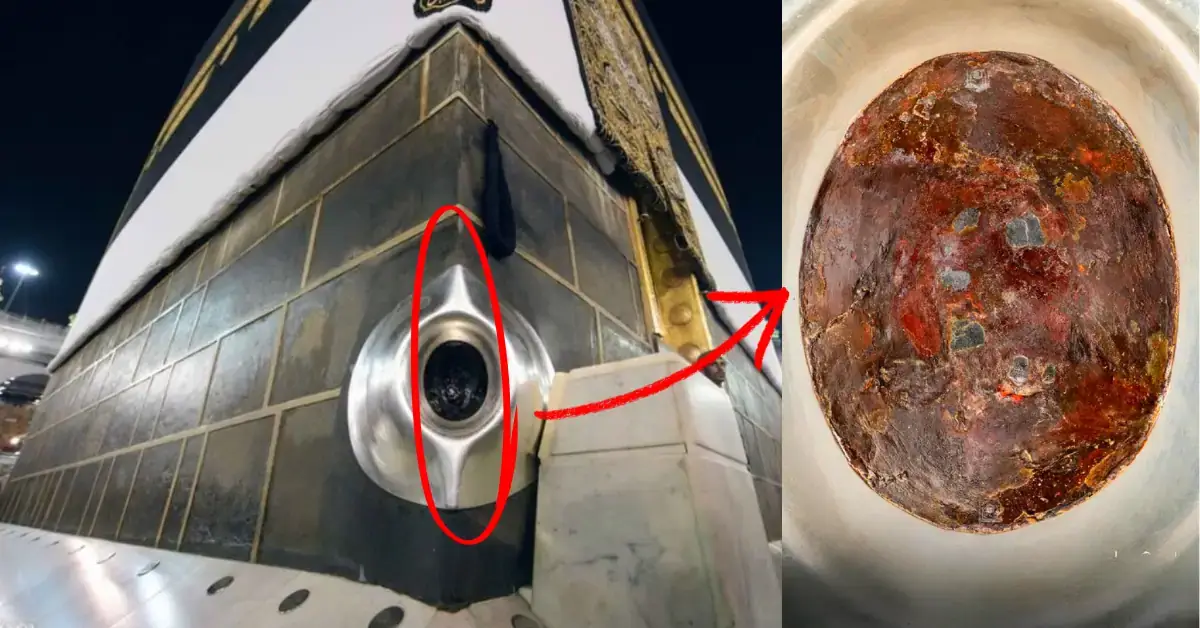
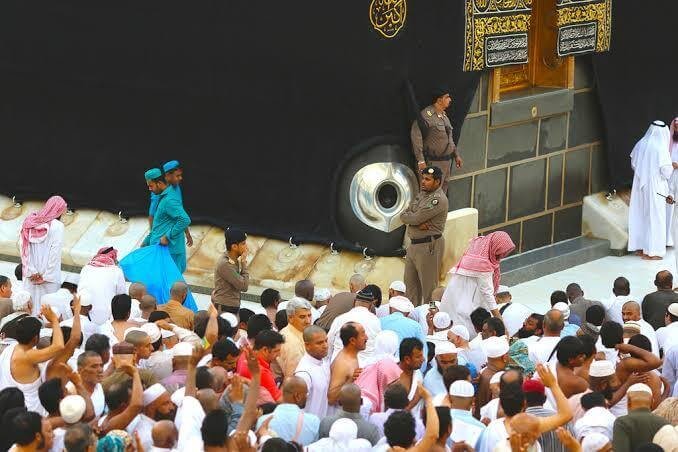
The Black Stone is a dark, fragmented stone set in a silver frame at the eastern corner of the Kaaba in Al-Masjid al-Haram, Makkah. Pilgrims start and end each circuit of Tawaf level with it. They may touch it, kiss it if they can reach it safely, or simply point toward it.
If you are preparing for Umrah, you will meet the Black Stone within minutes of entering the Mataf. This guide explains what it is, what we know of its history, how to begin Tawaf with it in mind, and how to plan the day around it, including the trip to Masjid Ayesha (Tan’eem) and back.
What Is the Black Stone?
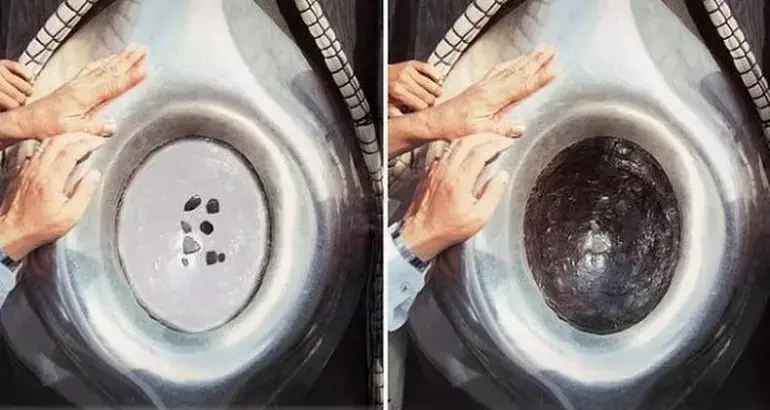
The Black Stone, known in Arabic as Hajar al-Aswad, is the most recognizable single point on the Kaaba. Today it is a group of dark fragments held together in a cement-like matrix, bordered by a heavy silver frame. The visible surface is small, which surprises many first-time visitors who expect something much larger.
Sources differ on its exact height above the ground. Estimates run from roughly one metre to one and a half metres, so think of it as around chest height for an adult. You can judge this yourself on arrival.
Where Is It Located?
It sits in the eastern corner of the Kaaba (often described as the south-eastern corner). Facing the Kaaba from the Mataf, it is on your left as you begin the circuit.
Do not confuse it with the Yemeni corner. The Yemeni corner (Ar-Rukn al-Yamani) is the next corner on the circuit. It is touched if possible and not kissed. The Black Stone is the corner where the starting line and the stone’s frame are found.
Why Is It Important in Islam?
Its importance comes from two things: its connection to the building of the Kaaba by Ibrahim (AS) in Islamic tradition, and the fact that Prophet Muhammad ﷺ kissed it.
Hadith collections also report that the stone was whiter than milk when it came down and was darkened by human sins (reported in Jami’ at-Tirmidhi). Another narration, from Ibn Abbas (RA), says it will testify on the Day of Judgment for those who touched it sincerely. Scholars discuss the grading and interpretation of such narrations, so if you want to quote them, check with a qualified scholar.
The classic balance comes from Umar ibn al-Khattab (RA). He addressed the stone and said that he kissed it only because he had seen the Prophet ﷺ do so, and that the stone itself brings neither benefit nor harm. That is the key idea for visitors. The act is following the Sunnah, not seeking power from a stone. Kissing it is a recommended act where possible. It is not required, and Tawaf is valid without it.
A Short History of the Black Stone
| Period | Event | Why it matters |
|---|---|---|
| Before Islam | The Kaaba was a site of pilgrimage, and the stone was already honored | It was set within the Kaaba before the Prophet’s mission |
| Before prophethood | The Quraysh rebuilt the Kaaba after flood damage and argued over who would place the stone | Muhammad ﷺ asked them to lift it together on a cloth, ending the dispute peacefully |
| 683 CE | The Kaaba was damaged during the siege of Makkah | The stone is reported to have been fractured |
| After the siege | Abd Allah ibn al-Zubayr (RA) repaired it with a silver binding | The earliest known protective frame |
| 930 CE | The Qarmatians raided Makkah and took the stone to eastern Arabia | It was held for about 22 years and returned in pieces |
| Later centuries | Silver frames were repaired and replaced by successive custodians | The frame you see today is the product of this long maintenance |
Accounts of fragment counts vary. Many sources mention seven or eight visible pieces. The point to take away is that the stone has survived theft, fire damage, and centuries of touch.
How Tawaf Begins at the Black Stone
- Reach the Mataf after entering the Haram with your Ihram and Niyyah complete.
- Find the starting marker on the Mataf floor near the stone’s corner. Haram staff and signs will also guide you, and the layout and crowd-control rules can change, so follow instructions on the day.
- Face the stone and make the gesture of greeting (istilam). This can be touching and kissing, touching with the hand, or raising your hand toward it from where you stand.
- Keep the Kaaba on your left and walk anticlockwise.
- Return to the same line for each of the seven circuits and repeat the gesture, or simply point.
Practical rulings, such as what to say at the gesture or details for men and women, differ slightly in how they are presented. Follow your own school of thought or ask a qualified scholar.
Can’t Reach It? That Is Normal
Most pilgrims do not touch the stone, and that is fine. The reports describe pointing toward it as a valid alternative, including in times of crowding. If you can’t touch it safely, point and keep walking.
- Do not push, elbow, or hold up others to reach it.
- Never block the flow of Tawaf to wait for your turn.
- Avoid it entirely during the busiest periods if you are elderly, pregnant, or travelling with small children.
Family, Elderly and Mobility Considerations
- Wheelchair and mobility-aid users: Use the designated lanes and let staff guide you. The stone is not reachable from a wheelchair in most conditions, so pointing is the practical choice.
- Elderly pilgrims: Choose quieter windows and avoid peak prayer exits.
- Families: Agree a meeting point before entering the Mataf, since phones may not reach each other in crowds.
- Women: Many women choose to point from the side of the flow. That is an equally valid way to greet the stone.
Best Times to Visit the Black Stone
Crowds in the Haram are generally heaviest right after the five prayers and in peak season (Ramadan, school holidays, Hajj period). These are general patterns, not guarantees, so build in flexibility.
| Window | General pattern |
|---|---|
| Just after Fajr and Isha | Many pilgrims leave their prayer rows and enter Tawaf together |
| Mid-afternoon (non-peak season) | Often calmer, though heat is higher |
| Late night | Can be quieter outside Ramadan |
| Ramadan and Hajj season | Expect heavy crowding at all hours |
From Your Hotel to Tan’eem and Back: Where the Black Stone Fits
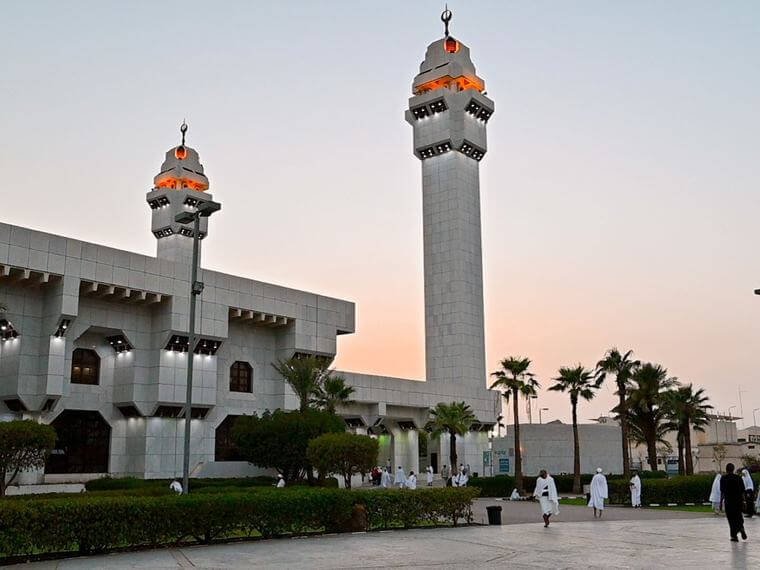
For many visitors, a second Umrah means entering Ihram again at Masjid Ayesha (Masjid al-Tan’eem). This is the Miqat used by people already in Makkah. It is associated with the Hadith of Aisha (RA), who made Umrah from Tan’im after Hajj with her brother Abd al-Rahman (RA).
A typical round trip with Masjid Ayesha Taxi looks like this:
- Hotel pickup. Your driver collects you in an air-conditioned vehicle, whether a sedan, family SUV, or mini-van, depending on group size and luggage.
- Ride to Masjid Ayesha. The distance is commonly cited as around 7 to 8 km, and travel time varies with traffic (usually somewhere between 15 and 30 minutes outside peak times).
- Ihram at the Miqat. You make your Niyyah and pray two rakat. The driver waits, and a wait of about 15 to 20 minutes is the usual arrangement. Tell your driver if you need longer.
- Return to Al-Haram. You choose the drop-off. The vehicle goes to the nearest permitted point, which depends on road closures and crowd control, and you walk the remainder.
- Tawaf begins at the Black Stone. From there it continues through Sa’i and Halq or Taqsir.
If you prefer, you can return to your hotel first to change, rest, and walk to the Haram later.
Book a Round-Trip Taxi with Driver Waiting Included. Message us on WhatsApp at +966 57 4915 372 or visit https://masjidayeshataxi.com/ to arrange a private transfer. Please confirm vehicle type, waiting time, and drop-off point when booking.
After Tawaf: A Makkah Ziyarat Route
Many pilgrims use the days around Umrah to see the historic sites of Makkah. These visits are not rites of Umrah, and they are for learning and reflection. Ask a scholar if you have any questions on conduct at specific sites.
Estimated times only. Actual timing depends on traffic, weather, prayer times, and how long your group stays. Agree the route and waiting time with your driver in advance.
| Order | Stop | Estimated stop time | Driver and navigation note |
|---|---|---|---|
| 1 | Jabal Thawr (the mountain linked to the Hijrah) | 30 to 45 min | South of Al-Haram. Search “Jabal Thawr” on maps. Stay in the vehicle if you do not plan to climb |
| 2 | Jannat al-Mu’alla (Al-Hajun cemetery) | 15 to 20 min | Near the northern side of the Haram. Visiting the cemetery interior is typically for men only. Women may view from outside |
| 3 | Jabal al-Noor (Cave Hira) | 1.5 to 2.5 hours if climbing | Search “Jabal Al-Noor (Hira Cave)”. The climb is steep, so many families and elderly pilgrims choose to view from the base |
| 4 | Mina | 15 to 20 min | Drive-through viewing outside Hajj season. Access is restricted during Hajj |
| 5 | Muzdalifah | 10 to 15 min | Open land between Mina and Arafat. Outside Hajj, it is a brief stop |
| 6 | Arafat | 30 to 45 min | Search “Arafat” or “Jabal Rahmah.” Check access and conditions for the day |
Allow roughly five to six hours for the whole route including breaks, and consider splitting it across two days with children or elderly travelers. At Mina, Muzdalifah, and Arafat, access and rules differ during Hajj season, so confirm with your driver before the day.
Booking Information
Private transfers can be arranged for individuals, families, and small groups. When you message us, include:
- Number of travelers and luggage
- Hotel name or area (for example Aziziyah, Jabal Omar, Kudai, or near the Clock Tower)
- Preferred pickup time, ideally around prayer times
- Whether you need hotel return or Haram drop-off
- Any wheelchair, walker, or mobility needs
Message +966 57 4915 372 on WhatsApp or visit https://masjidayeshataxi.com/.
FAQs
1. What is the Black Stone?
It is the dark, fragmented stone set in a silver frame at the eastern corner of the Kaaba in Makkah, where Tawaf begins and ends.
2. Where exactly is the Black Stone?
In the eastern corner of the Kaaba, inside Al-Masjid al-Haram, about chest height for most adults.
3. Is it compulsory to kiss the Black Stone?
No. Kissing it follows the Sunnah, but Tawaf is valid without it. Pointing toward it is an accepted alternative.
4. What if I cannot reach it because of the crowd?
Point toward it from where you are and continue. Do not push or wait in the flow.
5. Is the Black Stone worshipped?
No. Muslims worship Allah alone. The practice follows the example of the Prophet ﷺ, as Umar (RA) explained.
6. Why is the Black Stone broken?
Sources describe damage during the 683 CE siege and during its removal by the Qarmatians in 930 CE. It is now held together in a silver frame.
7. What is the difference between the Black Stone and the Yemeni corner?
The Black Stone is the starting corner and may be kissed if possible. The Yemeni corner is touched if possible, not kissed.
8. When is the Haram least crowded?
Often outside the windows right after prayers and outside peak seasons, but patterns vary. Be flexible.
9. How do elderly pilgrims approach it?
Choose quieter times, stay at the edge of the flow, and point toward the stone rather than approaching.
10. How far is Masjid Ayesha from the Haram?
Commonly cited as about 7 to 8 km. Travel time depends on traffic.
11. How long does a taxi driver usually wait at Masjid Ayesha?
A wait of around 15 to 20 minutes is the usual arrangement. Tell your driver in advance if you need longer.
12. Can the taxi take me directly to the Haram after Ihram?
The driver goes to the nearest permitted drop-off point. Road closures and crowd rules mean you may walk the final stretch.
13. Can I visit Jabal al-Noor and Jabal Thawr on the same day as Umrah?
Possible, but long. Many pilgrims separate them, especially with children or elderly travelers.
14. How do I book a round trip?
Message +966 57 4915 372 on WhatsApp or use https://masjidayeshataxi.com/ with your hotel, group size, and preferred time.