
Is Public Transport or Taxi Better for Visiting Masjid Ayesha? (Pros, Cons & Costs)
The Makkah bus is the lowest-cost way to reach Masjid Ayesha, and a taxi is usually easier for families, elderly pilgrims, and anyone already in Ihram. Which one suits you depends on your group, your hotel location, and the time of day.
If you are staying in Makkah and want to perform an additional Umrah, you will go to Masjid Ayesha (Masjid al-Tan’eem) to enter Ihram, then return to Al-Masjid al-Haram. The mosque is not far, but how you travel can change your whole day. This guide compares the bus and the taxi honestly, with costs, timing, and practical tips.
Why do pilgrims go to Masjid Ayesha?
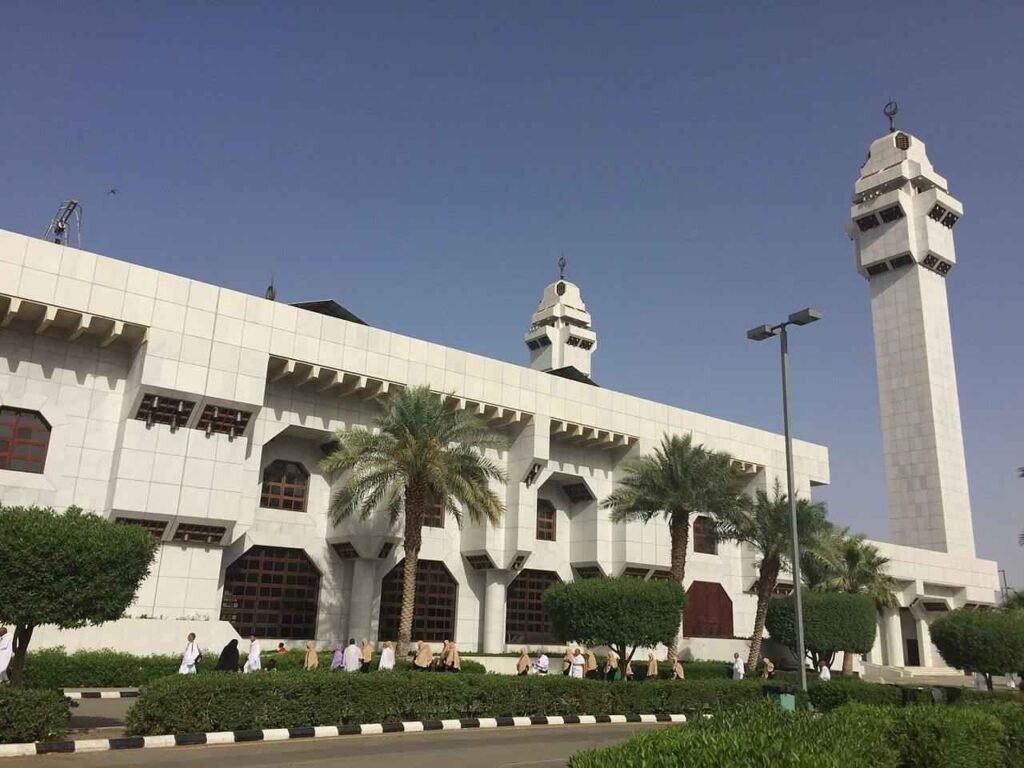
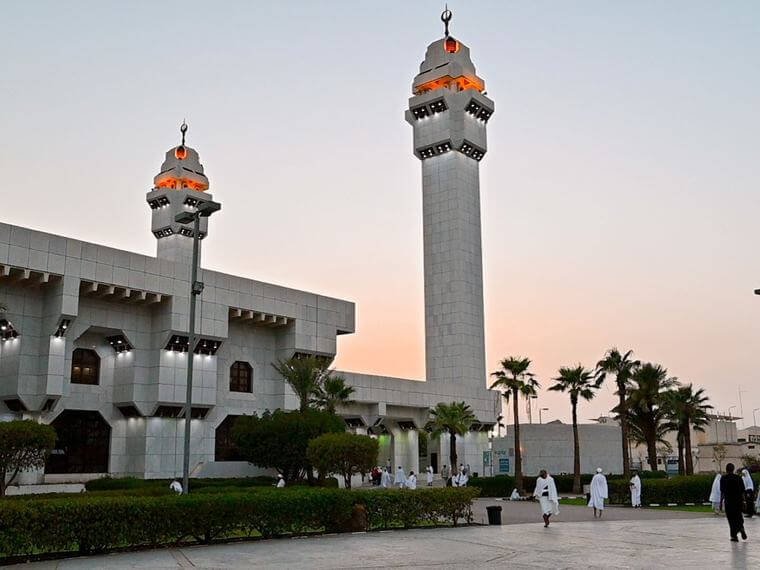
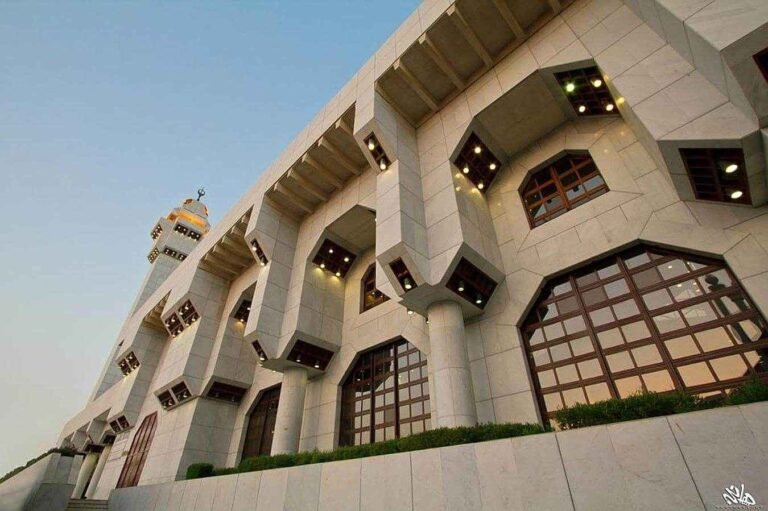
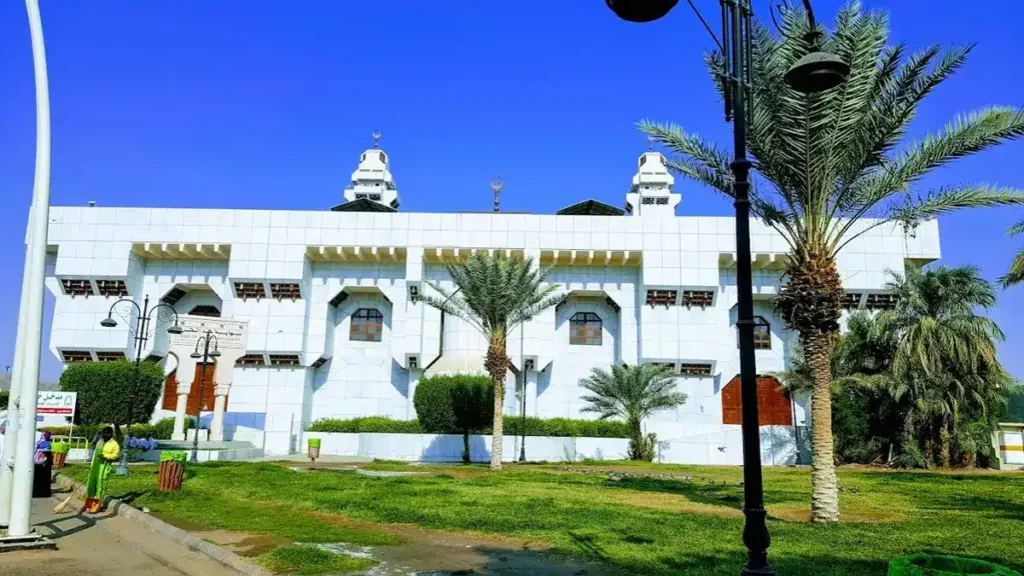
Masjid Ayesha sits outside the boundary of the Haram, in the Tan’eem area. Pilgrims who are already in Makkah and wish to perform another Umrah go outside the Haram boundary, make their Niyyah for Umrah, pray two rak’ahs, and return to the Haram for Tawaf, Sa’i, and Halq or Taqsir.
The place is linked to Aisha (R.A.), whom the Prophet ﷺ sent to Tan’eem to enter Ihram for Umrah. This article covers travel only. For questions about the rules of repeated Umrah, please ask a qualified scholar.
How far is Masjid Ayesha, and how long does the trip take?
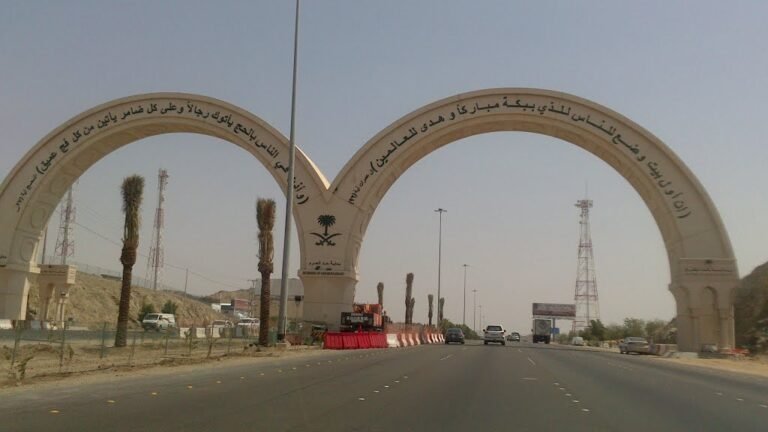
Masjid Ayesha is about 7.5 kilometres from Masjid al-Haram, on the road toward Madinah. By taxi, travel time usually falls between 15 and 30 minutes depending on traffic. By bus, expect longer: roughly 20 to 35 minutes on the bus ride itself, and more at busy times, plus the walk to the stop and the wait for the bus.
Public transport to Masjid Ayesha: pros and cons
Makkah has a public bus network operated under the Royal Commission, and one of its routes passes through Sayyida Aisha Mosque (Miqat) in Taneem. Route numbers and stops can change, so check the Makkah Bus app or the signs at the stop on the day.
Pros
- Lowest fare. The standard ticket is SAR 4 per person each way, which suits solo travelers and budget trips.
- No bargaining. The fare is fixed.
- Works well outside the busiest hours.
Cons
- You must walk to a stop first. The terminal commonly used from the Haram side is about a 15–20 minute walk from the Haram, and that walk is in Ihram on the way back to the mosque or in regular clothes on the way out.
- Buses stop often and can be crowded after prayers, on weekends, and in Ramadan.
- You wait for the next bus on both legs, and the return leg happens when you are already in Ihram and tired.
- Standing and stairs are hard for elderly pilgrims and young children.
- Luggage, strollers, and wheelchairs are difficult to manage.
Taxi to Masjid Ayesha: pros and cons
Pros
- Door to door. A taxi from your hotel lobby saves the walk to a stop and the wait for a bus.
- Faster, usually 15–30 minutes.
- A private car is air-conditioned and has space for Ihram bags, water, and a small bag of belongings.
- With a round-trip booking, the driver waits while you make Niyyah and pray two rak’ahs, then takes you to the Haram or back to your hotel.
- Much easier for elderly pilgrims, families with children, and pilgrims with limited mobility.
Cons
- Costs more per person when you travel alone.
- Street-hailed fares are often negotiated, and prices rise in Ramadan, Hajj season, and after prayers.
- Quality varies, so agree on the price, the wait, and the drop-off before you get in.
What does each option really cost?
Published figures vary a lot, so treat these as reported ranges, not fixed prices.
| Public bus | Standard taxi | Pre-booked private taxi | |
|---|---|---|---|
| Price basis | Per person | Per car, often negotiated | Per car, confirmed in advance |
| Typical figure reported | SAR 4 each way | Reports range from about SAR 40 to SAR 100 round trip, higher in peak periods | [Confirm current rate with Masjid Ayesha Taxi on WhatsApp] |
| Walk to start point | Yes | No (hotel pickup possible) | No (hotel pickup) |
| Driver waits during Niyyah | No | Only if agreed | Yes, when booked as round trip with waiting |
| Return to hotel or Haram | Bus to the Haram area, then walk | Depends on agreement | Your choice: hotel or Haram |
| Suitable for | Solo travelers, low budget | Short, flexible trips | Families, elderly, groups |
A quick example. Suppose a family of five travels. The bus costs SAR 4 x 5 people x 2 legs = SAR 40 in fares. A car shared by five people costs the same whether it is one person or five, so if a private round trip is priced at, say, SAR 100, that works out to SAR 20 per person. This is an illustration only. The gap in fares can be smaller than expected once you count walking time, waiting time, and the effort for children and elders.
Where does your time actually go?
| Step | Bus | Private taxi |
|---|---|---|
| Reach the starting point | Walk or ride to the stop | Pickup at hotel |
| Wait | For the next bus | Driver is already there |
| Ride | About 20–35 min | About 15–30 min |
| At the mosque (Ihram, Niyyah, two rak’ahs) | Your own pace, but the return bus timing is uncertain | Driver waits for you |
| Return | Wait for bus, ride, walk to the Haram | Direct to the Haram or hotel |
Many pilgrims plan the whole trip as about an hour and a quarter. One guide describes a round trip with a 15-minute pause for Ihram and two rak’ahs as roughly 1 hour 15 minutes. The bus can take noticeably longer, mostly because of waiting.
Which should you choose? A decision guide
- Traveling alone, comfortable walking, flexible on time: the bus is a reasonable choice.
- Family with children: a taxi or private van keeps everyone together and rested.
- Elderly parents or limited mobility: a private taxi is generally the more comfortable option. Ask for a driver who can help with the car door and bags.
- Group of 4 to 7 people: a family van often makes sense, because you share one fare.
- Travelling after Isha, Jumu’ah, or in Ramadan: pre-booking helps, because buses and street taxis are busiest then.
- Short on time: a taxi saves the most time.
Practical tips for a smooth trip
- Change into Ihram clothes before you leave, if that suits you, or bring them in a bag. Many pilgrims use the washrooms at the mosque. Ask your scholar or group leader what applies to you.
- Choose your hours. Between prayers, traffic usually moves better. Avoid leaving right after a prayer ends when crowds are leaving the Haram.
- Decide the drop-off in advance. Returning to the Haram directly saves a hotel stop. Returning to the hotel lets the elderly rest first.
- Agree the details before you ride. Ask the price, how long the driver will wait, and where you will be dropped.
- Carry water and a small bag for shoes and documents.
- Allow extra time in peak seasons. Ramadan and Hajj season change both traffic and fares.
Booking a taxi with Masjid Ayesha Taxi
Masjid Ayesha Taxi offers private, air-conditioned transfers from your Makkah hotel to Masjid Ayesha, with a return to your hotel or to Al-Haram. The driver waits while you complete Niyyah and your two rak’ahs, so you don’t need to find another ride back.
Book a Round-Trip Taxi with Driver Waiting Included.
- WhatsApp: +966 57 4915 372
- Website: https://masjidayeshataxi.com/
Send your hotel name, number of passengers, number of bags, and preferred time, and mention if anyone needs extra help getting in and out of the car.
Final thought
The bus is a low-cost option and can work well for a solo traveler who is comfortable walking and waiting. For families, elderly pilgrims, and anyone who wants a calmer trip, a pre-booked taxi usually saves more than time. Whichever you choose, plan your timing, confirm your route, and keep your focus on your Umrah.
FAQs
1. Is public transport or a taxi better for Masjid Ayesha?
The bus is cheaper, while a taxi is faster and easier, especially for families and elderly pilgrims. The better choice depends on your group and timing.
2. How far is Masjid Ayesha from the Haram?
About 7.5 km, roughly 7 to 8 km depending on the route and starting point.
3. How long does a taxi take?
Usually 15 to 30 minutes, depending on traffic and prayer times.
4. How much does the bus cost?
The standard Makkah Bus fare is SAR 4 per person per trip.
5. How much does a taxi cost?
Published figures vary widely, from about SAR 40 to SAR 100 or more for a round trip, and higher in peak periods. Confirm the price before you ride.
6. Will the driver wait while I enter Ihram and pray?
With a round-trip booking that includes waiting, yes. Confirm the waiting time when you book.
7. Can I be dropped at the Haram instead of my hotel?
Yes, with Masjid Ayesha Taxi you can choose the Haram or your hotel.
8. Is the bus suitable for elderly pilgrims?
It can be difficult because of the walk to the stop, crowding, and steps. A private taxi is generally more comfortable.
9. What is the best time to travel?
Between prayers, and outside Ramadan evenings and Friday peaks, traffic is usually lighter.
10. Can I wear Ihram clothing in a taxi?
Many pilgrims travel dressed in Ihram clothes or change at the mosque. Follow the guidance of your scholar or group leader.
11. Can a family travel together in one vehicle?
Yes. Family SUVs and mini-vans suit larger groups with bags.
12. How do I book?
Message +966 57 4915 372 on WhatsApp with your hotel, passenger count, luggage, and preferred time, or use https://masjidayeshataxi.com/.
13. Can I do another Umrah as often as I want?
This is a religious question. Please ask a qualified scholar rather than relying on a travel guide.