Makkah Haram Boundary Guide: What It Means and Why It Matters for Your Umrah
If you are staying in Makkah and planning to perform an additional Umrah, you have probably come across the term Haram boundary and wondered what it actually means — and why it matters for something as simple as putting on Ihram. This guide explains the Haram boundary in plain language, how it differs from the Miqat boundary, and what it practically means for your trip to Masjid Ayesha and back to Al-Haram.
What Is the Haram Boundary?
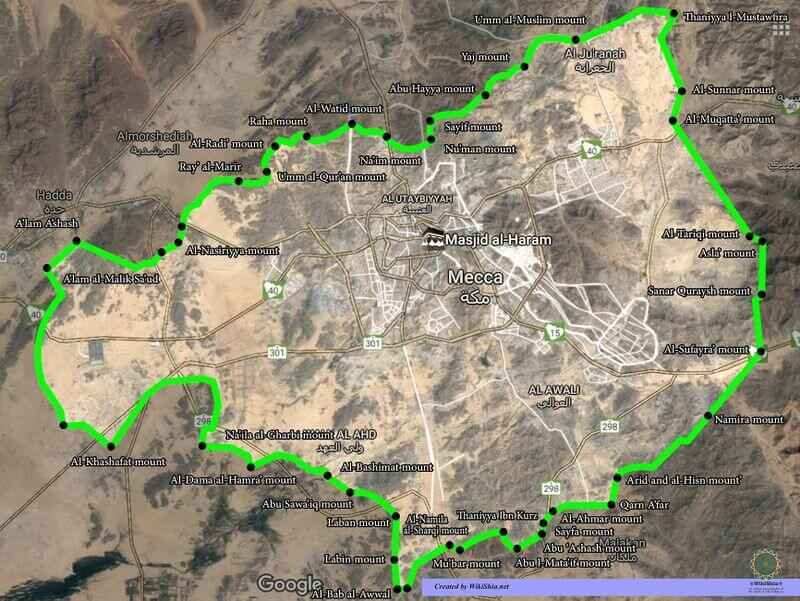
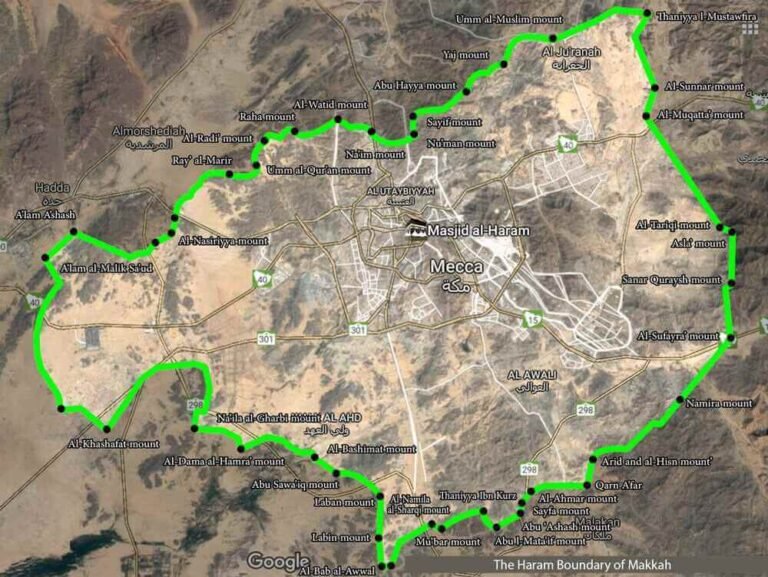
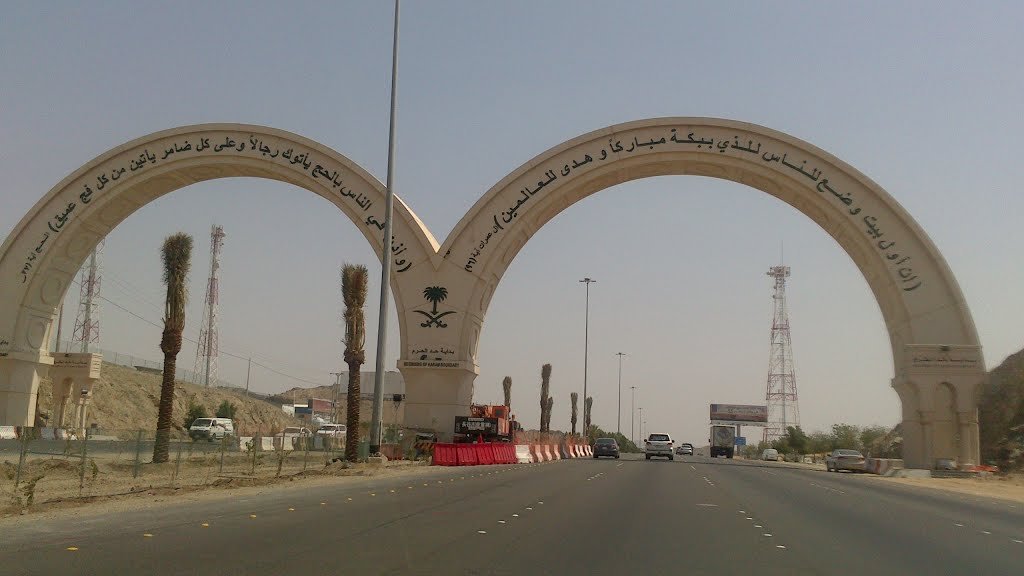
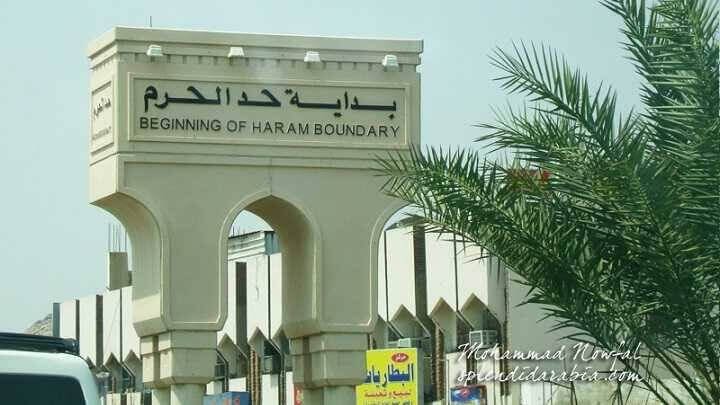
The Haram boundary (in Arabic, Hudud al-Haram) marks the outer limits of the sacred sanctuary that surrounds Al-Masjid al-Haram in Makkah. This is a defined geographic area, historically marked by boundary stones and signs placed at various points around the city, within which certain rules apply that do not apply anywhere else on earth — for example, hunting animals, cutting live trees or plants, and carrying weapons for conflict are all prohibited inside this zone. Non-Muslims are also not permitted to enter the Haram boundary.
The Haram boundary is not the same as the walls of Al-Masjid al-Haram itself. It is a much larger area — the whole of central Makkah and its surroundings fall within it, extending out toward the edges of the city in different directions and distances.
Haram Boundary vs. Miqat Boundary: The Key Difference
This is where most explanations online get confusing, because two different boundaries are involved:
- The Miqat boundary is the outer limit that pilgrims coming from outside Makkah must not cross without first entering Ihram. There are several Miqat points around the city (such as Dhul Hulaifah, Juhfah, and others, depending on the direction of travel), and they are located much farther from the city center than the Haram boundary.
- The Haram boundary is the inner sanctuary limit, much closer to the center of Makkah, within which the sanctuary rules apply.
In simple terms: the Miqat boundary is crossed once, on the way into Makkah, by pilgrims arriving for the first time. The Haram boundary is what matters for anyone who is already inside Makkah and wants to perform an additional, voluntary Umrah — because a person cannot enter Ihram from a point that is already inside the sacred sanctuary. They need to first travel to a point outside the Haram boundary, and Masjid Ayesha (also known as Masjid Al-Taneem) is the closest and most commonly used point for this purpose.
Why Masjid Ayesha Matters
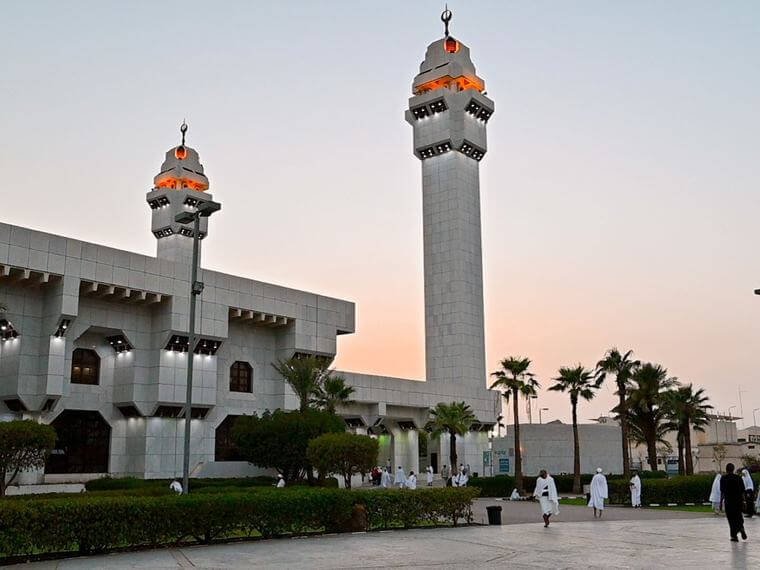
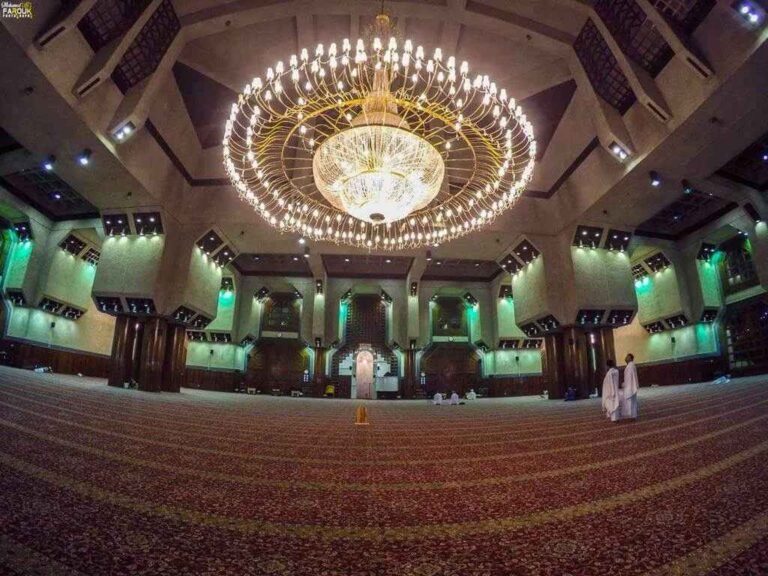
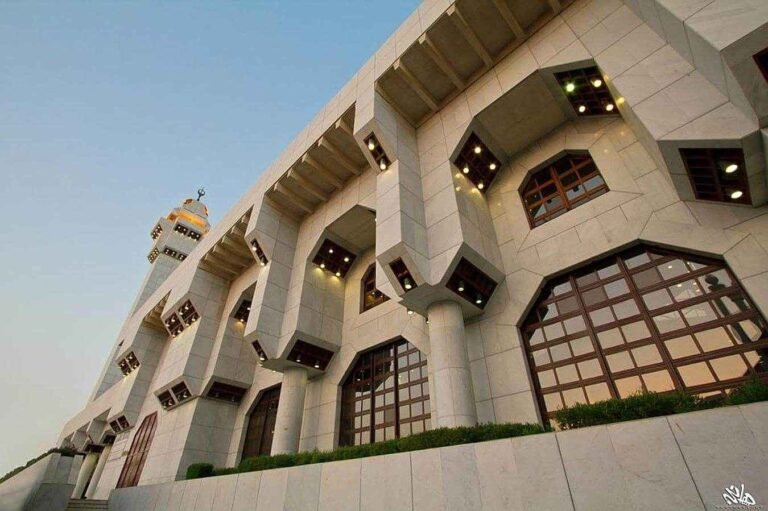
Masjid Ayesha sits just outside the Haram boundary, making it the nearest recognized place where residents and visitors already in Makkah can go to formally begin Ihram for a second or additional Umrah. This is rooted in a well-known narration involving Hazrat Ayesha (R.A.), who was instructed to travel to this location for exactly this purpose during the time of the Prophet Muhammad (peace be upon him). Today, the mosque serves the same role for millions of pilgrims and Makkah residents each year.
Because Masjid Ayesha is located outside the Haram boundary but still relatively close to central Makkah, the trip is short — typically a matter of minutes by road rather than hours — which is what makes it a practical option for repeat Umrah, even for families and elderly travelers.
Is Your Hotel Inside or Outside the Haram Boundary?
Almost all hotels in central Makkah — including those around the Clock Tower (Abraj Al Bait), Aziziyah, Jabal Omar, and Kudai — are located inside the Haram boundary. This means that if you are staying at any of these areas and wish to perform an additional Umrah, you cannot simply put on your Ihram at the hotel and begin. You need to travel outside the boundary first — to Masjid Ayesha — put on Ihram there, make your Niyyah (intention), pray the Two Rakat Sunnah of Ihram, and then return toward Al-Haram to begin your Tawaf and Sa’i.
Step-by-Step: From Your Hotel to Ihram and Back
- Pickup from your hotel. A private vehicle collects you and your group from your hotel lobby at a time that fits around prayer times.
- Travel to Masjid Ayesha. The drive out to the mosque, outside the Haram boundary, generally takes a short period depending on traffic.
- Ihram preparation and Niyyah. Inside or near the mosque, pilgrims change into Ihram clothing (if not already wearing it), make their Niyyah, and pray the Two Rakat Sunnah of Ihram.
- Driver waits. A private driver typically waits during this stage rather than requiring a second booking, which removes the stress of finding return transport while in Ihram.
- Return journey. The vehicle then takes you back — either to Al-Haram directly to begin Tawaf and Sa’i, or to your hotel first, depending on your preference.
Family and Elderly Considerations
For families traveling with children, or pilgrims with mobility needs, the short distance outside the Haram boundary is one of the main reasons Masjid Ayesha is preferred over farther Miqat points. A private, air-conditioned vehicle — sedan for smaller groups, or a family van/mini-van for larger groups — reduces walking, avoids crowded public transport, and allows the group to move at their own pace, especially important while managing Ihram clothing and prayer timing.
Booking a Private Transfer Outside the Haram Boundary
Masjid Ayesha Taxi provides private, door-to-door transfers from your Makkah hotel to Masjid Ayesha and back — with the driver waiting while you complete your Ihram preparation. This removes the uncertainty of public transport and lets your group move on your own schedule around prayer times.
Book a Round-Trip Taxi with Driver Waiting Included — message us on WhatsApp at +966 57 4915 372 or visit masjidayeshataxi.com to arrange your private transfer.
FAQs
1. What is the Haram boundary?
The Haram boundary is the outer limit of the sacred sanctuary surrounding Al-Masjid al-Haram in Makkah, within which specific sanctuary rules apply.
2. Is the Haram boundary the same as the Miqat boundary?
No. The Miqat boundary is farther from the city and applies to pilgrims arriving from outside Makkah, while the Haram boundary is the closer, inner sanctuary limit.
3. Why can’t I put on Ihram at my hotel in Makkah?
Because almost all Makkah hotels are located inside the Haram boundary, and Ihram for an additional Umrah must be entered from a point outside that boundary.
4. Is Masjid Ayesha inside or outside the Haram boundary?
Masjid Ayesha is located just outside the Haram boundary, making it the nearest point where pilgrims already in Makkah can begin Ihram.
5. How far is Masjid Ayesha from central Makkah?
It is a short drive from central Makkah areas such as the Clock Tower, Aziziyah, and Jabal Omar, generally taking only minutes depending on traffic.
6. Do I need to book a return trip separately?
With Masjid Ayesha Taxi, the driver waits at Masjid Ayesha while you complete your Ihram, so a single round-trip booking covers the entire journey.
7. Can I go directly to Al-Haram after Ihram instead of back to my hotel?
Yes, most pilgrims are dropped directly at Al-Haram after Masjid Ayesha to begin Tawaf and Sa’i without an extra stop.
8. How long does the whole process take?
The trip itself is short, though the total time depends on how long you take for Ihram preparation, Niyyah, and the Two Rakat Sunnah of Ihram at the mosque.
9. Is Masjid Ayesha suitable for elderly or family travelers?
Yes, a private vehicle removes the need to use crowded public transport, which is often the main concern for elderly travelers and families with children.
10. What should I have ready before the pickup?
It is helpful to have your Ihram clothing (or a change of clothes) ready in advance, so you are not delayed once you arrive at Masjid Ayesha.
11. Can a private taxi accommodate a large family group?
Yes, larger groups can be arranged with a family van or mini-van instead of a standard sedan.
12. Is the Haram boundary marked physically?
Yes, historically the boundary has been marked with stones and signage at various points around the city.
13. Can non-Muslims enter the Haram boundary?
No, non-Muslims are not permitted to enter the Haram boundary of Makkah.
14. How do I book a taxi to Masjid Ayesha?
You can message Masjid Ayesha Taxi directly on WhatsApp at +966 57 4915 372 or visit masjidayeshataxi.com to arrange a private round-trip transfer.
15. What is the significance of Hazrat Ayesha (R.A.) in this location?
Masjid Ayesha is named after Hazrat Ayesha (R.A.), who was directed to this location outside the Haram boundary to enter Ihram for an additional Umrah, a practice pilgrims continue to follow today.